

Music. Film. Journey.
Original cinematic music and short films by Gary Russell.
Somewhere Beyond Here
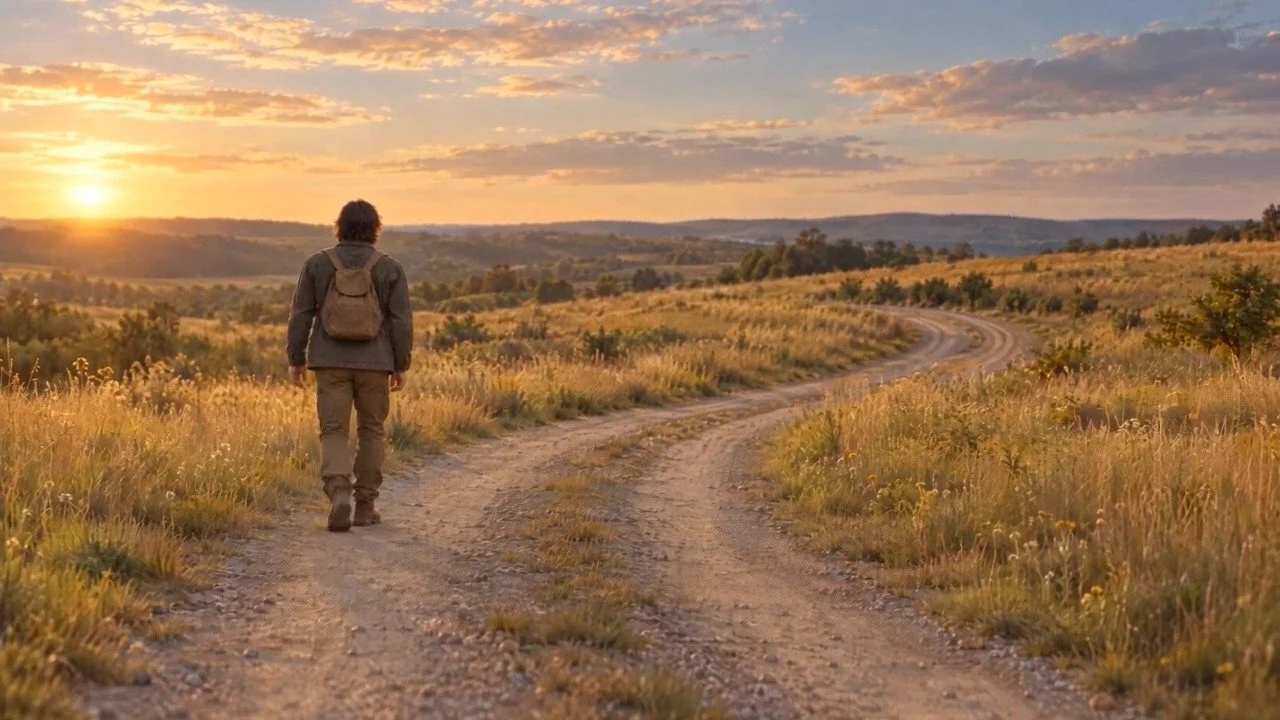
A traveler leaves a quiet cabin and follows a winding path through misty woods toward an open horizon. Watch the short film, set to original music by Gary Russell, or listen to the soundtrack on its own.
The Crossing
Music & Stories
Every piece has a story. Explore the music from newest to oldest, listen here, and save an MP3 to take with you. Headphones encouraged.
Save music to a playlist
Learn how to save Sound Voyages music and add it to your favorite playlists.
How to Create Your Music Playlist (PDF)

The Crossing
October 2026
The soundtrack for The Crossing, the first Sound Voyages music film. Composed by Gary Russell. Watch the film above, or listen and download the music here.

Finding True North
August 2026
Nothing very complicated here. Starts out with a Latin rhythm and then turns sideways. Some guitar and then the usual “Gary slowdown” at the end with synths, organ and strings. I even left the piano out of this one.

The Space
August 2026
I decided to take a shot at adapting a piece from my favorite progressive rock band — Marillion. I didn’t get very far into it due to the challenge of replicating the vocals, so I broke it off into my own composition (about the 2:04 mark). You just never know where a piece is going to end up!

Good Days Ahead
July 2026
A new piece about 4 minutes long. Nothing cosmic here — but a continuation of the learning journey of composition, recording and mixing. In fact, my “mixing coach” who reviews these pieces said it was my best one yet. Enjoy.

Into The Void
May 2026
This one is a tad longer and in the “progressive” style that I love. Inspired (and slightly taken) from a band called The Lens whose members later formed the English band IQ. I’ll be sure to share the royalties with them. 🙂 A great headphone listen.

Prelude in G(min) — The Slow Voyage
May 2026
The “voyage” series continues with a slow and deliberate symphonic throwback. When you listen to this, the name of “prelude” will be obvious. This one brings some emotion for me and maybe it does for you as well. Nothing but classical to begin — with a flare of Pink Floyd at the end. Use headphones if you can.

On The Lighter Side
April 2026
A much simpler and shorter piece. Based on a theme from 15 years ago and now arranged with MIDI. Nothing complicated on this one… a short break from the darkness.

Where The Wind Takes You
April 2026
A continuation of the “Voyager” series and a more progressive ballad style. There are elements of Pink Floyd, Moody Blues and even a Ted Nugent chord progression. (Strange mix, I know.) This one came to me while listening to a song on an airplane from Reno to Long Beach from a band that only released one album. What a gift. Definitely a headphone piece (just over 4 mins).

Voyager
March 2026
There are 3 distinct “sections” with very different vibes. The middle part is the “darkest,” reflecting how tough personal journeys can sometimes be. However, if we stick to it we can usually make it through into the light.

Angels and Demons
January 2026
Ok, a little dark maybe. The mood of the country or perhaps wrestling with my own demons of restlessness. The angels come in at the middle to “dance” a little. At the end, the angels and demons get together and coexist knowing that neither one won or lost.

Open The Gates
November 2025
Like all my pieces, this started one way and then went a different way. The first two sections were originally written in the 1990s. I had just gotten into MIDI and recorded it with an 8-track cassette recorder and a “built-in” mixer. That seems like ancient technology compared to today. So I added instruments, EQ and new mixing techniques. There are four sections spread over 5 mins. Sort of like “opening the gates” to a new era of MIDI composition.

The Water Is Wide
September 2025
A new arrangement of an old piece. A VERY old piece going back a couple of centuries. It consists of 2 parts where the first part is original (with MIDI orchestration), followed by the main theme in 4 segments. Inspired by James Taylor’s rendition on the album “New Moon Shine” and also featured in the movie “The River Wild” with Meryl Streep and Kevin Bacon. I did this one especially for my wife and 2 daughters as a tribute to our love of the Sierras in northern California.

Getting Past The Fault Line
June 2025
This one was also fun. Originally written in the 1990s when I was in my 30’s. Now done with more instruments and more parts. The “ending” starts at around time marker 3:12 and is almost 3 mins long. Sort of a “dreamy” vibe with various percussion instruments leading the way.

Moving Along
April 2025
This one was fun. A little “funkier” than other pieces with guitar and drum samples used for the first time. Inspired (partially stolen) by a song from a progressive band named RPWL called Roses. Hoping to do more like this.

Purple Blues
February 2025
This little blues piece was inspired by Joe Bonamassa — a phenomenal blues artist who recently played with an orchestra at the Hollywood Bowl. Watching that performance (via YouTube) provided a spark to try something similar. This is nowhere near as good but gave me an opportunity to try some things and learn. (The name “Purple Blues” is derived from my precious Minnesota Vikings collapse in the 2025 NFL playoffs.)

Remember It All
January 2025
A mix of “old” and “new” on this one. The intro is almost a direct steal from an artist named Lee Abraham (progressive style). The main section was originally written by Gary in the 1980s and now orchestrated with MIDI. Picture a dark, smokey bar on the ending featuring the piano and trumpet.

White Christmas — Gary’s Version
December 2024
A small rendition of White Christmas — with a slight jazzy flare. All done with MIDI using the Roland keyboard as the controller and Kontakt samples.

A Wedding Processional
November 2024
This was originally written in college for piano only. It was played at several weddings and then re-recorded with MIDI and a Roland FP60 keyboard in late 2024. Supposed to be in the form of an andante (walking) march.

A Wedding Recessional
May 2023
Gary first wrote this piece in the early 1980s during college. It has been played at several weddings including Gary and Linda’s own wedding in 1994 as well as both Alanna and Claire’s weddings. This rendition is from 2018.

Child of Vision
October 2024
An adaptation of the Supertramp (Roger Hodgson) piece — instrumental only. Gary did this all in MIDI with the Roland keyboard and Reaper software.

Bach Prelude in C
A variation on J. S. Bach’s Prelude in C. It was Gary’s first piece recorded with Reaper software and a Roland FP60 MIDI keyboard.

Soul Mates
2022
This is a simple piece written for Linda. It’s a regular acoustic piano with MIDI orchestration in collaboration with Nate Zuniga. Nate does all the guitar, bass and drums. Recorded in 2022 at Nate’s home studio in McMinnville, OR.
About Sound Voyages
Sound Voyages is where I bring together original digital music and AI-generated video. Stories set to music. Journeys for the imagination.
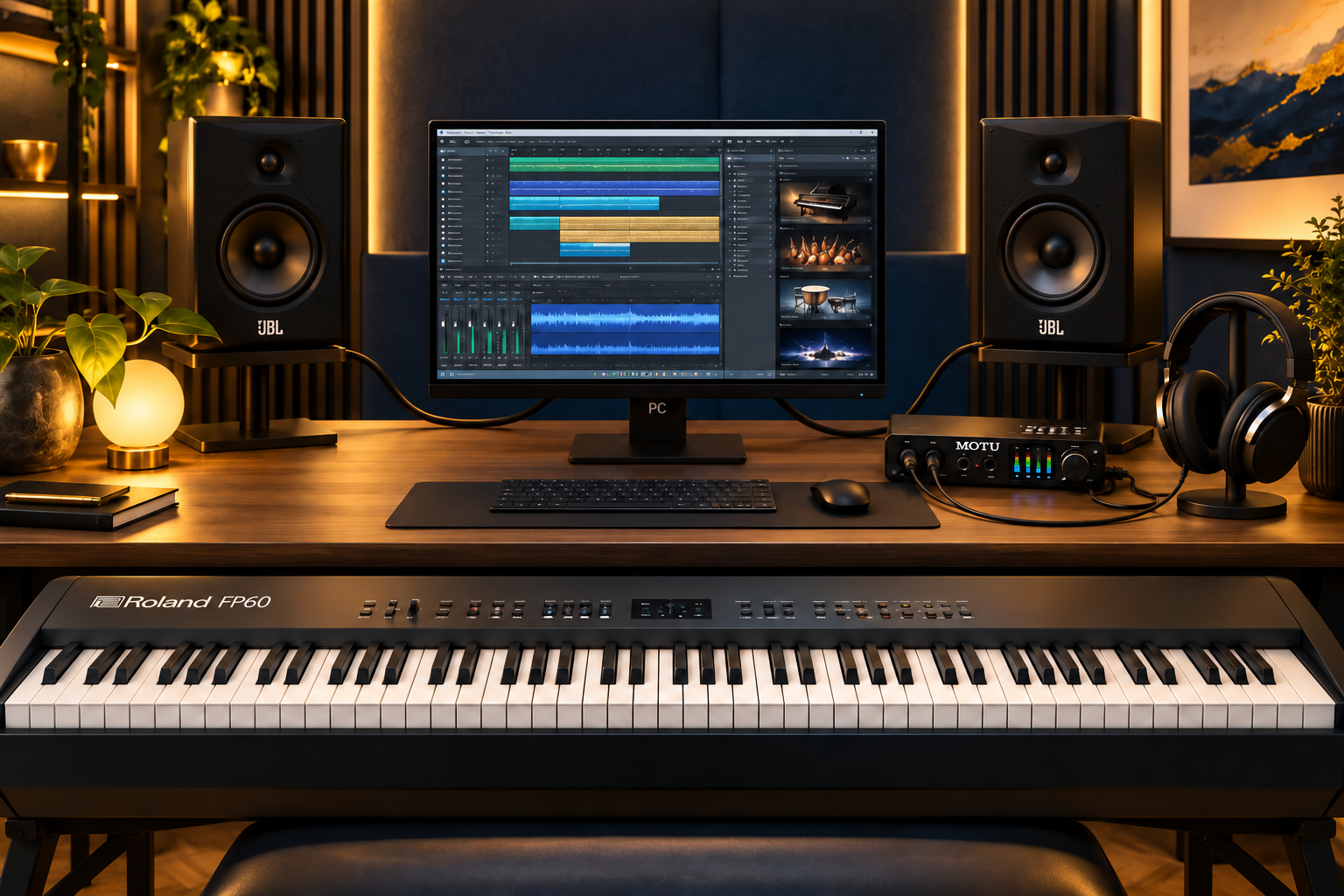
The music is original except where noted, such as White Christmas. I use MIDI (Musical Instrument Digital Interface) to send the notes I play on a keyboard to a PC. Sound libraries on the computer turn those notes into the sounds of violin, flute, piano, guitar, organ, drums, and more.
My Roland FP60 keyboard connects to the PC via USB. A MOTU audio interface connects the computer to JBL speakers and headphones so I can listen, arrange, and mix.
The music doesn’t fit neatly into a single genre. It blends progressive, cinematic, and rock influences and is generally instrumental, with no vocals or words. I've never had a talent for true 'songwriting,' just 'musical pieces.'
In September 2026, I started experimenting with adding imagery to the music. That grew into using AI—a newly discovered passion—to create short films. That’s when The Crossing came about.
I think of it as original digital music combined with AI-generated video. In the end, a human puts it all together.
Enjoy.
Gary Russell